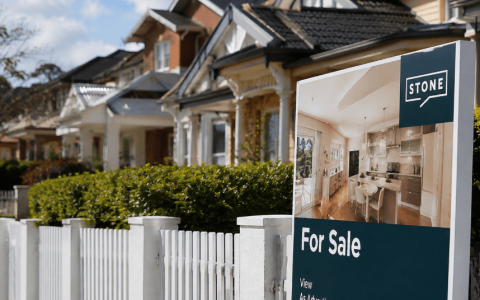

Australia’s housing market has recorded its steepest decline in new home loans, with investor borrowing falling sharply amid higher interest rates, changes to property tax concessions and weakening house prices. New figures reveal a significant slowdown in lending, raising concerns about housing investment and the broader property market.
New Home Loans Fall 15 Per Cent in September Quarter
Data released by the Australian Bureau of Statistics (ABS) shows the number of new home loans dropped 15 per cent between June and September, while the total value of lending declined 16 per cent.
Property investors experienced the largest reduction, with new investor loans falling 31 per cent. By comparison, loans to owner-occupiers declined 5 per cent.
Both the overall decline and the fall in investor lending were the largest recorded in the official statistics.
Mish Tan, the ABS head of finance statistics, said the figures indicated investors were responding to several pressures, including higher borrowing costs, “tax changes and expectations of lower house prices”.
The slowdown follows months of weakening housing market conditions, which have intensified since the federal government’s May budget outlined changes to negative gearing and capital gains tax concessions.
Australian House Prices Record Sharpest Decline in Four Decades
According to property research company Cotality, national house prices have fallen 6.7 per cent from their March peak, marking the fastest decline in 40 years.
The downturn, initially concentrated in Sydney and Melbourne, has spread to other capital cities. Auction clearance rates have also weakened, reflecting reduced buyer demand.
Five interest rate increases this year have pushed borrowing costs to their highest level since 2008, adding further pressure to prospective buyers and existing mortgage holders.
Property Tax Changes Fuel Political Debate
The federal government’s changes to investor tax concessions have become a central point of disagreement between Labor, the Coalition and property industry representatives.
Liberal housing spokesperson Andrew Bragg argued that the policies had undermined confidence in Australia’s housing market.
“Loans to everyone are down. No-one wins from these crazy taxes,” Mr Bragg said.
However, Housing Minister Clare O’Neil defended the reforms, arguing that the smaller decline in owner-occupier lending demonstrated a shift towards people purchasing homes to live in.
“Volumes are down, as you would expect in a period where prices are softening. But these figures also clearly show a strong shift away from investors and towards Australians buying a home to live in,” Ms O’Neil said.
Reserve Bank Identifies Impact on Investor Demand
Reserve Bank of Australia governor Michele Bullock acknowledged that rising interest rates were contributing to weaker borrowing activity.
However, she noted that investor lending had declined substantially more than during previous monetary tightening cycles.
“[That] suggests that there’s something else going here, and the something else going on is the tax changes,” Ms Bullock said.
Her comments specifically addressed investor borrowing rather than the broader decline in owner-occupier loans.
Treasury modelling used to support the government’s reforms had forecast a two-percentage-point reduction in house price growth.
Treasury described that estimate as a structural, longer-term projection rather than a short-term forecast incorporating interest rate increases.
Although the government has publicly maintained its position, there is recognition within government that the housing market downturn has been more pronounced than anticipated.
Government Says Housing Market Is Shifting Towards Homebuyers
Ms O’Neil said the government’s objective was not to achieve a particular reduction in property prices but to improve opportunities for Australians seeking home ownership.
“We’ve had a housing market geared towards investors for a generation, and where did it get us? Plummeting home ownership, out-of-control house price increases, and a generation losing hope,” she told the ABC.
“These numbers show the balance is shifting back towards Australians who are buying a home to live in, and especially to our first home buyers.”
However, the ABS figures show first homebuyer loans declined 8 per cent, compared with a 3.5 per cent reduction among other owner-occupiers.
While first homebuyers experienced a considerably smaller decline than investors, the figures suggest they remain exposed to broader housing market pressures.
Mr Bragg criticised the government’s interpretation, arguing that reduced lending was not a positive outcome.
“Fewer loans is bad. We need to see more lending, because if we have more lending, then we have more houses,” he said.
Building Industry Warns Housing Investment Could Weaken Further
Master Builders Australia chief executive Denita Wawn said the lending figures supported concerns previously raised by the construction and property sectors.
Speaking at the National Press Club during a discussion about corruption in the building industry, Ms Wawn warned that declining investment could worsen Australia’s housing challenges.
“I hate to say it, but we were right … We called it out, a decline in investment in housing, whether it’s owner occupiers or investors, at a time when we can least afford it,” she said.
“We only think this is the start. It’s going to get worse.”
Outlook for Australia’s Housing Market
The record fall in home lending highlights the combined impact of elevated interest rates, changing investor tax arrangements and declining property values.
While the federal government sees reduced investor activity as an opportunity to improve access for owner-occupiers, industry representatives warn that weaker investment could place additional pressure on housing supply.
The coming months will be critical in determining whether Australia’s housing market stabilises or experiences a more prolonged downturn.

Cory Weinberg is a contributor to Sproutwired.com, covering a wide range of topics including news, politics, business, technology, sport, entertainment and lifestyle. He focuses on delivering clear, balanced reporting that helps readers stay informed about current events and emerging developments. Cory’s work highlights relevant stories, practical insights and important issues affecting communities and industries, with an emphasis on accuracy, clarity and information that readers can trust.