
A powerful new observatory in Chile has identified 800,000 previously unknown cosmic events in just one night, signalling what scientists say is the beginning of a new era in real-time space discovery. The Vera C. Rubin Observatory, home to the largest digital camera ever built, is expected to transform how astronomers — including those in Australia — observe and understand the changing Universe.
The milestone highlights the scale of modern astronomy and the growing importance of global collaboration, with Australian researchers among those set to benefit from the flood of new data.
Rubin Observatory delivers unprecedented number of cosmic alerts
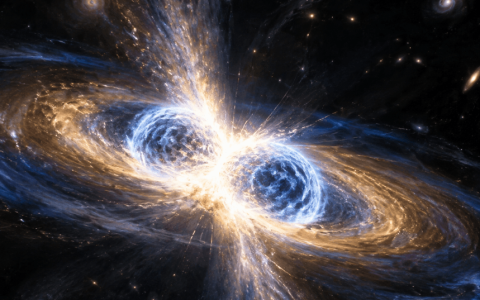
On 24 February 2026, the NSF–DOE Vera C. Rubin Observatory issued 800,000 alerts to astronomers in a single night. These alerts identified a wide range of cosmic phenomena, including newly detected asteroids, exploding stars known as supernovae, active galactic nuclei powered by supermassive black holes, and variable stars whose brightness changes over time.
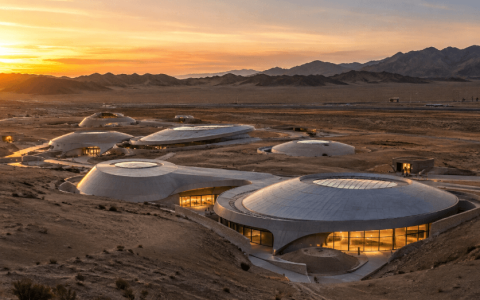
Located on Cerro Pachón in northern Chile, the observatory is positioned to scan the Southern Hemisphere sky — the same region observed by major Australian facilities such as the Anglo-Australian Telescope in New South Wales.
Scientists expect the observatory will eventually generate as many as seven million alerts every night once it reaches full operational capacity.
This constant stream of information will allow astronomers to monitor cosmic events as they happen, rather than discovering them months or years later.
A decade-long survey to map the changing Universe
The alerts mark a key step ahead of the observatory’s flagship project, the Legacy Survey of Space and Time (LSST). Over the next decade, Rubin will scan the entire Southern Hemisphere sky every night, building a detailed time-lapse record of the Universe.
In its first year alone, the observatory is expected to capture images of more objects than all previous optical observatories combined throughout human history.
Luca Rizzi, a program director at the US National Science Foundation, said the observatory would allow scientists to follow cosmic events as they unfold.
“By connecting scientists to a vast and continuous stream of information, Rubin Observatory will make it possible to follow the Universe’s events as they unfold, from the explosive to the most faint and fleeting,” he said.
Real-time alerts could help detect threats to Earth
The observatory’s alert system has practical implications beyond pure science.
Its powerful camera can detect changes in the sky by comparing new images with earlier ones. Any difference — such as a new asteroid or a sudden stellar explosion — automatically triggers an alert to astronomers.
This capability could help scientists identify potentially hazardous asteroids earlier, giving more time to assess any risk to Earth.
It will also allow astronomers to observe supernovae before they reach peak brightness and detect rare interstellar objects passing through the Solar System.
For Australia, which already plays a significant role in asteroid tracking and space observation, access to Rubin’s data could strengthen planetary defence efforts and research programs.
Advanced technology processes massive volumes of data
Rubin Observatory captures a new image of the sky every 40 seconds, generating enormous amounts of data that are processed using advanced computing systems in the United States.
Eric Bellm, from the University of Washington and NSF NOIRLab, said the alert system was designed to maximise scientific collaboration.
“Rubin’s alert system was designed to allow anyone to identify interesting astronomical events with enough notice to rapidly obtain time-critical follow-up observations,” he said.
The observatory produces around 10 terabytes of image data every night, requiring sophisticated algorithms and machine learning systems to analyse and distribute alerts.
Tom Matheson, interim director of the Community Science and Data Center, said the scale of the project presents both challenges and opportunities.
“The extraordinary number of alerts that Rubin will produce presents an exciting challenge for both astronomers and software engineers,” he said.
Capturing the Universe in motion
Scientists say one of Rubin’s most important features is its ability to track both sudden and long-term cosmic changes.
Rosaria Bonito, a researcher involved in the project, said this continuous monitoring will help scientists understand how stars evolve.
“These events are often short-lived, and scientists can easily miss them without continuous monitoring. Rubin will allow us to detect these changes as they happen and also track the evolution of stars over a decade,” she said.
This capability could lead to discoveries that reshape our understanding of how galaxies, stars and planetary systems form and change.
Conclusion: A new era of discovery with global impact
The Vera C. Rubin Observatory’s first night of scientific alerts represents a major leap forward in astronomy. By detecting hundreds of thousands of cosmic events in real time — and potentially millions every night — the observatory will provide an unprecedented view of the dynamic Universe.
For Australian astronomers and the global scientific community, the project promises new discoveries, improved planetary defence and deeper insight into the cosmos. As Rubin begins its decade-long survey, scientists expect it will uncover phenomena never before observed, reshaping our understanding of space and our place within it.

Cory Weinberg is a contributor to Sproutwired.com, covering a wide range of topics including news, politics, business, technology, sport, entertainment and lifestyle. He focuses on delivering clear, balanced reporting that helps readers stay informed about current events and emerging developments. Cory’s work highlights relevant stories, practical insights and important issues affecting communities and industries, with an emphasis on accuracy, clarity and information that readers can trust.