Japan on Sunday unveiled a rocket consisting of two satellites, one of which was operated by the government, to release data collected by rehabilitation satellites already in Bit Rabbit, accelerating its response to natural disasters. And enable more informed communication.
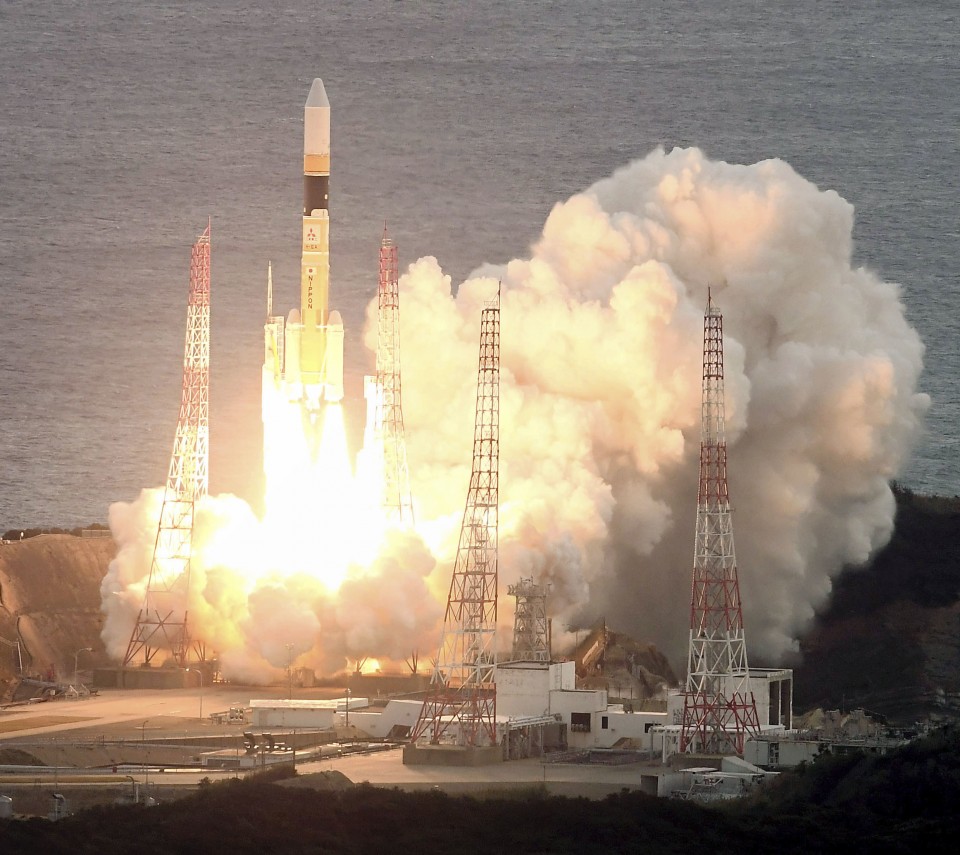
A photo taken from a Kyodo News helicopter on November 29, 2020, of a government satellite designed to relay data already collected by orbiting satellites at the Tanegashima Space Center in Kagoshima Prefecture in southwestern Japan. The opening of an H2A rocket is shown. (Kyodo)
Related coverage:
Japanese astronaut Noguchi says he still “lives” ISS life
Japan will launch a satellite to remove space debris in March
SpaceX spacecraft aboard Japanese astronauts from the United States
The H2A rocket, operated by Mitsubishi Heavy Industries Ltd. and the Japan Aerospace Exploration Agency, landed at 4:25 a.m. south of the Tanegashima Space Center in Kagoshima Prefecture, southwestern Japan.
The satellite – a government data relay satellite and Jaxa’s optical data relay satellite – entered their destination about 30 minutes later.
Both satellites sit in the same unit and will share basic components such as power sources and control systems.
“We will make full use of our intelligence-gathering satellites to strengthen our country’s national security and crisis management,” Prime Minister Yoshihid Suga said in a statement.
The relay satellite will initially conduct a test transmission of the data received by the fleet of information-collecting satellites, sending it back from its location in the ground role via optical communication.
When operational, they will help solve a problem that data can only be retrieved for a limited time when each observation satellite has a direct sight line that has a ground receiver.
Jaxa said sending data, including images and other information, via relay satellites can make transmissions more flexible and longer than any surveillance satellite.

Sally Morgan is a contributor at Sproutwired.com, covering a broad range of topics including news, politics, business, technology, sport, entertainment, and lifestyle. She focuses on delivering clear, balanced reporting and practical information that helps readers stay informed about current events and emerging developments. Sally is committed to presenting stories in an accessible and engaging way, with an emphasis on accuracy, relevance, and issues that matter to everyday readers across Australia and beyond.